Off-Grid vs Grid-Tied Solar
Understanding the Real Return on Investment
- Introduction
- First: There Often Isn’t a Choice
- Grid-Tied Solar: Financial ROI and Payback Thinking
- Off-Grid Solar: ROI Means Having Power at All
- EV Charging: A Common Question in Both Systems
- Two Systems, Two Very Different Goals
- Conclusion
Introduction
When people first start looking into solar, one of the most common questions you’ll hear is: “What’s my return on investment?”
That question comes up a lot in grid-tied conversations. But in my day-to-day work, especially with off-grid systems, I never hear those words.
Instead, the question is usually much simpler: “I need power here. Can you help me make that happen?”
And that difference matters, because off-grid and grid-tied solar have very different meanings when it comes to “ROI.” In many situations, homeowners aren’t weighing two options at all, there simply isn’t a choice.
Let’s clear that up.
First: There Often Isn’t a Choice
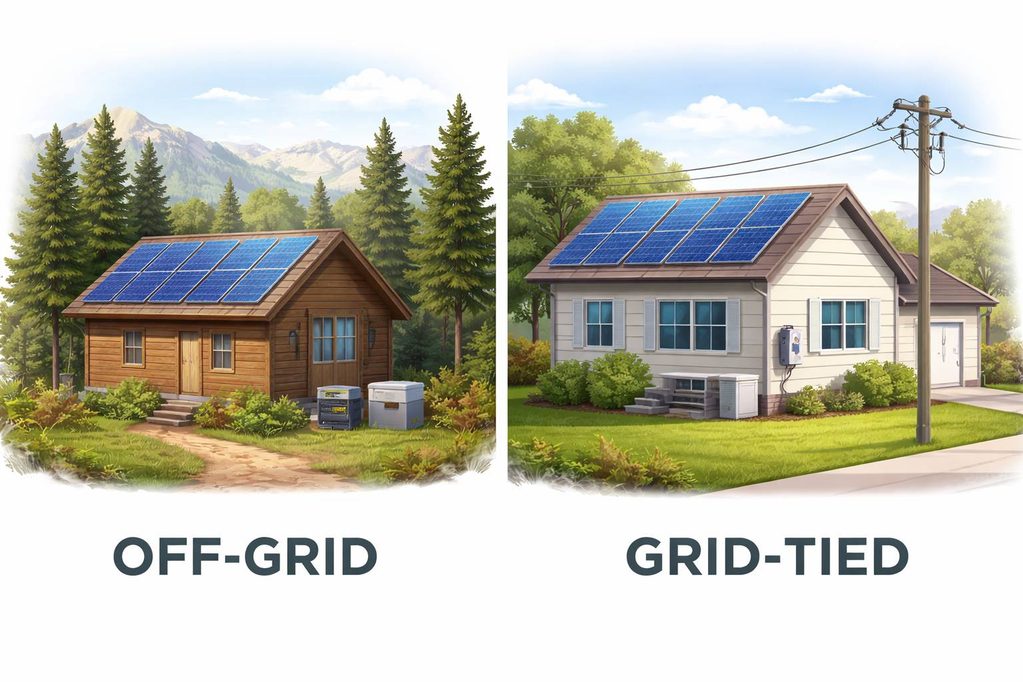
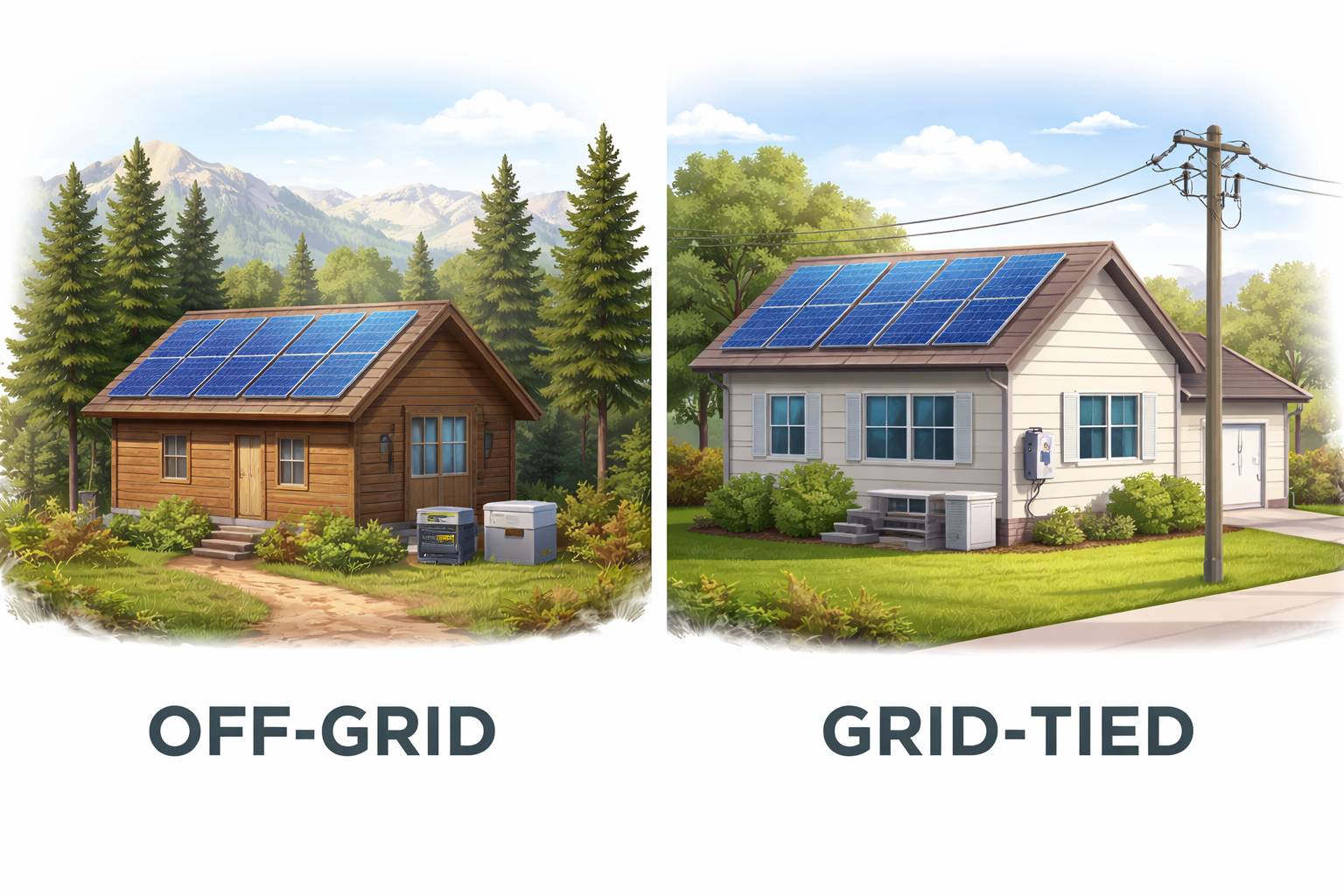
For homeowners in cities and towns, the electrical grid already exists. Solar systems in these locations are almost always grid-tied, because the infrastructure is already there.
For cabins, rural properties, and remote homes, there may be no grid at all. In those cases, solar isn’t an upgrade, it’s the only practical way to have electricity. That’s off-grid solar, and the value equation is completely different.
So before talking numbers, it’s important to understand that: Grid-tied solar is usually a financial decision
Off-grid solar is usually a necessity
Grid-Tied Solar: Financial ROI and Payback Thinking
Grid-tied solar is typically evaluated like this:
- Cost of the system
- Utility savings over time
- Incentives or rebates
- Estimated payback period
Many homeowners expect solar to “pay itself off” in a fixed number of years. But here’s the reality check:
When you buy a truck, a furnace, or a roof, you don’t expect to get all your money back. Solar is no different.
Grid-tied solar is really about:
- Reducing long-term energy costs
- Locking in predictable electricity pricing
- Protecting yourself from future rate increases
In recent years, grid-tied systems have also evolved to include battery backup and EV charging capabilities, turning them into more than just power-offset systems.
Off-Grid Solar: ROI Means Having Power at All
Off-grid solar has a very different return on investment.
If you buy a remote cabin with no electricity, the question isn’t:
“How long until this pays itself off?”
The real question is:
“How else would I get power here?”
Alternatives often include:
- Running generators daily
- Transporting fuel long distances
- Constant noise, maintenance, and fuel costs
- Limited or unreliable power
Off-grid solar provides:
- Reliable electricity where none existed
- Quiet, automatic operation
- Long-term independence from fuel delivery
- A massive quality-of-life upgrade
That is the return.
EV Charging: A Common Question in Both Systems
A growing number of homeowners ask:
“Can I charge an electric vehicle with solar?”
The answer is yes, on both grid-tied and off-grid systems, when designed correctly.
Grid-Tied Homes
Many modern grid-tied systems now:
- Support EV charging directly
- Use the grid as backup when solar isn’t available
- Pair with batteries for smarter load management
- With a solar roof on those sunny summer days you could potentially charge your vehicle for free depending on your system.
Off-Grid Homes
Off-grid EV charging is absolutely possible and already happening:
- Requires proper inverter sizing
- Requires adequate battery capacity
- Often managed with smart charging habits
I’ve had off-grid clients successfully charge electric vehicles by understanding when and how they charge, not just plugging in blindly.
With your off-grid solar system on those sunny summer days you are charging your vehicle for free depending on your system.
Two Systems, Two Very Different Goals
Here’s the simplest way to think about it:
Grid-Tied Solar ROI
- Lower energy bills
- Protection from rising utility rates
- Home value improvement
- Added features like backup power and EV charging
Off-Grid Solar ROI
- Electricity where none existed
- Independence from fuel and generators
- Reliability in remote locations
- Freedom from utility infrastructure
Trying to judge both systems by the same financial formula misses the point entirely.
Conclusion
Solar isn’t about “getting your money back.”
It’s about:
- What problem you’re solving
- What lifestyle you’re supporting
- How much control you want over your energy
For some homeowners, that means financial efficiency. For others, it means independence and self-reliance.
The right system isn’t the cheapest one, it’s the one designed for how and where you live.
IOTG SOLAR LTD 5 Critical Mistakes To Avoid Before Buying Solar.pdf
For individuals seeking consultation, education, or assistance in system designs related to grid-tie or off-grid solar applications, IOTG Solar stands ready to help. Our team is available to address questions, provide valuable insights, and offer support at every stage of the solar energy journey. Feel free to reach out to IOTG Solar anytime for expert assistance and comprehensive solutions tailored to your specific needs.
IOTG Solar…
Keeping you powered through education.