Short-Term System, Long-Term Thinking
Making Smart Choices in a Transitional System
- Introduction
- Why 12 Volts Now is Different from 24 or 48 Later
- Planning a Temporary but Effective System
- An Important Trade-Off to Understand
- Conclusion
Introduction
We get called out to some interesting solar setups from time to time, and this one definitely qualifies as a “tricky solar decision.”
The customer has a mix of gear:
- A used 12-volt Modified Sine Wave inverter/charger
- A set of used batteries
- A brand-new 2,700-watt solar array
Their goal is to run a temporary system for a couple of years before upgrading to a 24 or 48-volt setup.
The challenge? Figuring out how to tie all this together with a solar controller that works efficiently now, handles the large array, and will still work with a future higher-voltage system, without overspending.
Why 12 Volts Now is Different from 24 or 48 Later
Running a 12-volt system is very different from running a 24 or 48-volt system. At 12 volts, the current in the system is much higher for the same amount of power.
For example, to push 2,700 watts into a 12-volt battery bank, you’re looking at over 200 amps of current, way more than at 24 or 48 volts.
That means:
- The controller must handle high amperage safely
- Wiring needs to be thick enough to handle the load
When the customer eventually upgrades to 24 or 48 volts, the same power flows at lower current, which is easier on the controller and wiring.
The trick is finding a controller that:
- Handles heavy current now at 12 volts
- Is compatible with 24 or 48 volts later
- Isn’t oversized or unnecessarily expensive
Mppt controllers can adapt to different battery banks, making them perfect for this type of temporary setup.
Planning a Temporary but Effective System
In cases like this, it’s all about balance. We want the customer to get the most out of their new solar array, avoid overloading the existing 12-volt system, and avoid spending money on a controller they won’t need long-term.
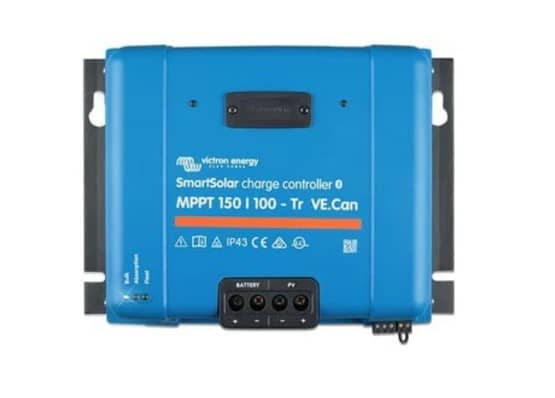
With the right controller, properly sized wiring, and batteries that can handle the higher current, we can build a system that is safe, reliable, and cost-effective in the short term. One smart approach here is to install a single controller and temporarily connect only three of the six solar panels. At 12 volts, this already pushes the controller close to its maximum output, so there’s no real benefit to adding more capacity right now.
This strategy prevents the customer from having to buy two large controllers or paying even more for an oversized, high-amperage controller that won’t be needed once the system is upgraded to 24 or 48 volts. Technically, all six panels could be wired in a series-parallel configuration to keep the array voltage around a safe 120 volts, but in that case the controller would simply current-limit and clip at its 100-amp maximum. It’s important to understand the difference: exceeding the controller’s voltage limit (for example, going over 150 volts) can permanently damage it, while exceeding the current limit just results in controlled clipping.
Because of that, connecting only three panels for now achieves nearly the same real-world result, without unnecessary complexity or stress on the system. When the customer is ready to upgrade to a higher-voltage battery bank, the remaining three panels can be added, and the same controller can continue to operate safely and efficiently.
An Important Trade-Off to Understand
There is one important consideration in this scenario that I discussed openly with the customer. By choosing an external solar charge controller for this setup, it does limit future upgrade paths, specifically the option of moving to a hybrid or all-in-one system later on.
Hybrid systems, where the inverter, charger, and solar controller are all built into a single unit, are becoming more common as the industry evolves. They offer a clean, compact design and simplify installation by reducing the number of separate components. When you commit to an external controller now, you’re essentially committing to a more traditional system design made up of individual parts.
The customer understands this trade-off. He’s aware that when he’s ready to upgrade in a couple of years, his future system may be more minimal compared to some of the newer hybrid systems on the market. For him, that’s an acceptable compromise in exchange for making the most of his existing equipment today.
This is a conversation I’ve had many times over the years. Some customers stay the course with their original controller and continue building a system around separate components. Others decide, when the time comes, to sell off a controller and other existing devices, then transition toward a hybrid solution instead. There’s no right or wrong answer, it comes down to priorities, timing, and comfort with evolving technology.
As with many decisions in solar, we’ll see how this one plays out. The system will work well either way, and the customer is going into it informed, realistic, and with a clear understanding of the options ahead.
Conclusion
This situation highlights why planning ahead is so important in solar. By choosing a controller that can adapt to future voltage upgrades while still handling a large solar array today, we can build a system that maximizes performance now, avoids overspending on oversized equipment, and provides a safe, reliable temporary setup until a long-term 24 or 48-volt upgrade makes sense.
At the same time, it’s important to recognize that this approach does influence future system design choices. By going with an external controller now, the customer understands that moving to a hybrid or all-in-one system later may not be the most natural path. Instead, he may end up with a more traditional, component-based system compared to some of the newer hybrid solutions on the market.
This is a reality I’ve seen many times in this business. Some customers stick with the controller and continue to build around individual components, while others eventually sell off equipment and transition to a hybrid system when the timing is right. There’s no right or wrong answer, only informed decisions based on current needs and future goals.
Even though this setup is temporary, with the right components and proper planning, it will perform efficiently and safely for years to come.
IOTG SOLAR LTD 5 Critical Mistakes To Avoid Before Buying Solar.pdf
For individuals seeking consultation, education, or assistance in system designs related to grid-tie or off-grid solar applications, IOTG Solar stands ready to help. Our team is available to address questions, provide valuable insights, and offer support at every stage of the solar energy journey. Feel free to reach out to IOTG Solar anytime for expert assistance and comprehensive solutions tailored to your specific needs.
IOTG Solar…
Keeping you powered through education.