Pole-Mount Solar Array

How to Know If a Pole-Mount Solar System Will Work for You
- Introduction
- You Need Full Sun and Your Roof Just Doesn’t Have It
- You want the option to tilt your panels seasonally
- You don’t want panels on your roof, or your roof isn’t ideal structurally
- You like easy maintenance
- You’re willing to invest a bit more upfront
- Conclusion
Introduction
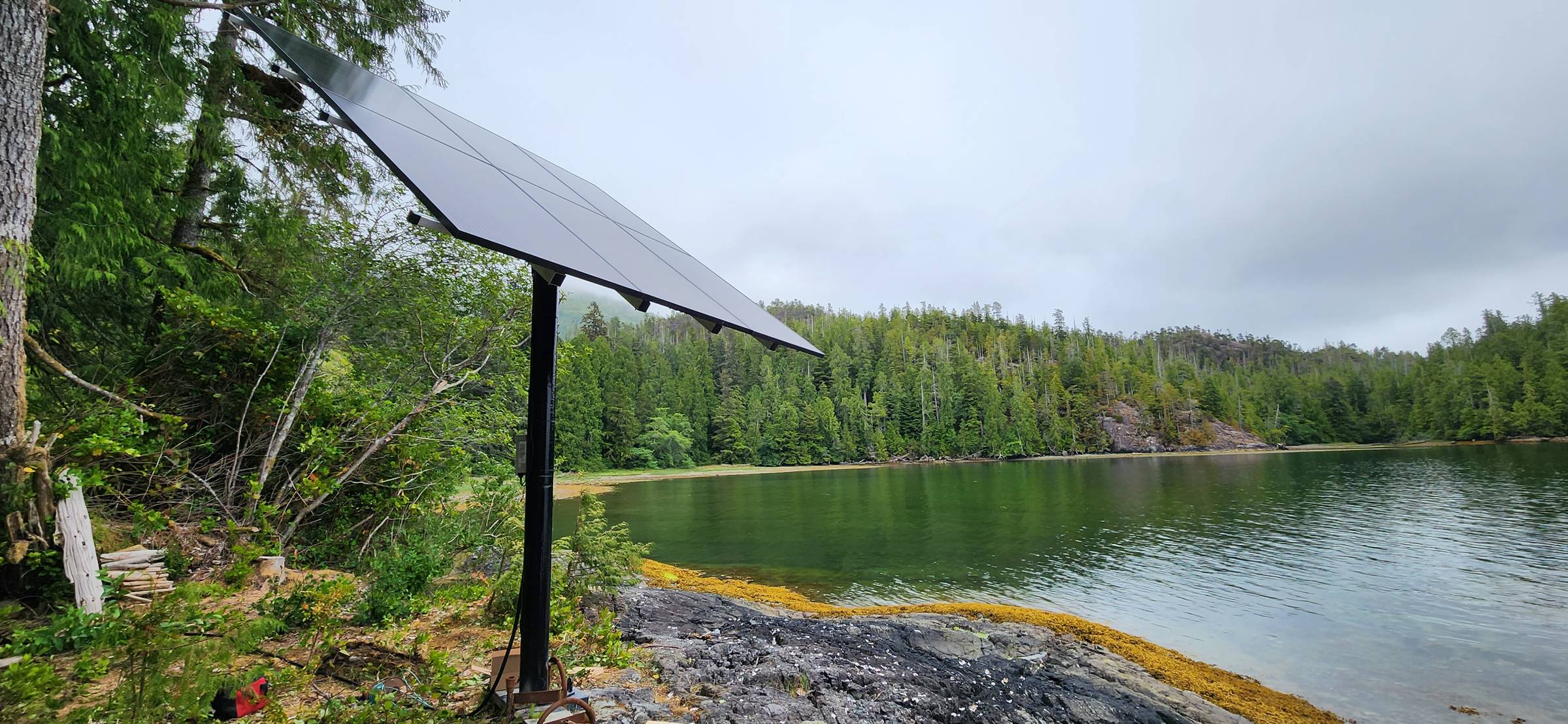
Over the years, I’ve installed several pole-mount solar systems and just recently have another customer interested in putting one in. They’re one of my favourite ways to set up a solar array, especially for off-grid cabins. But they’re not the right choice for everyone.
People often ask me, “Will a pole mount work on my property?” The answer depends on a few simple but important factors.
Here’s how to know if a pole-mount system is a good fit for you and your property.
You Need Full Sun and Your Roof Just Doesn’t Have It
This is the number one reason people end up choosing a pole mount.
A lot of cabins are tucked into the trees, have steep A-frame roofs, or face the wrong direction. If your roof only gets a few hours of good sunlight, a pole mount can be the perfect solution.
In some cases, a ground mount might actually be the better option, especially if you have plenty of open space and stable soil. But for many waterfront cabins, the ground near the shoreline rises and falls with the tides or seasonal water levels, which makes a standard ground mount risky or impractical.
In those situations, a pole mount is often the only reliable solution. It keeps the panels high, secure, and out of the reach of shifting ground conditions, while still letting you take full advantage of the sunshine your roof can’t offer.
With a pole mount, you can place the array:
- In a clearing
- Closer to the best sun path
- Away from shadows that move throughout the day
If you’ve got a sunny spot on your property, even if it’s 50 to 150 feet away from the cabin, a pole mount is usually the best option.
But here’s the first question I always ask: What’s the ground like where you want the pole to go?
Before we even think about panels, we need to know:
- Can we dig a hole at least 4 feet deep?
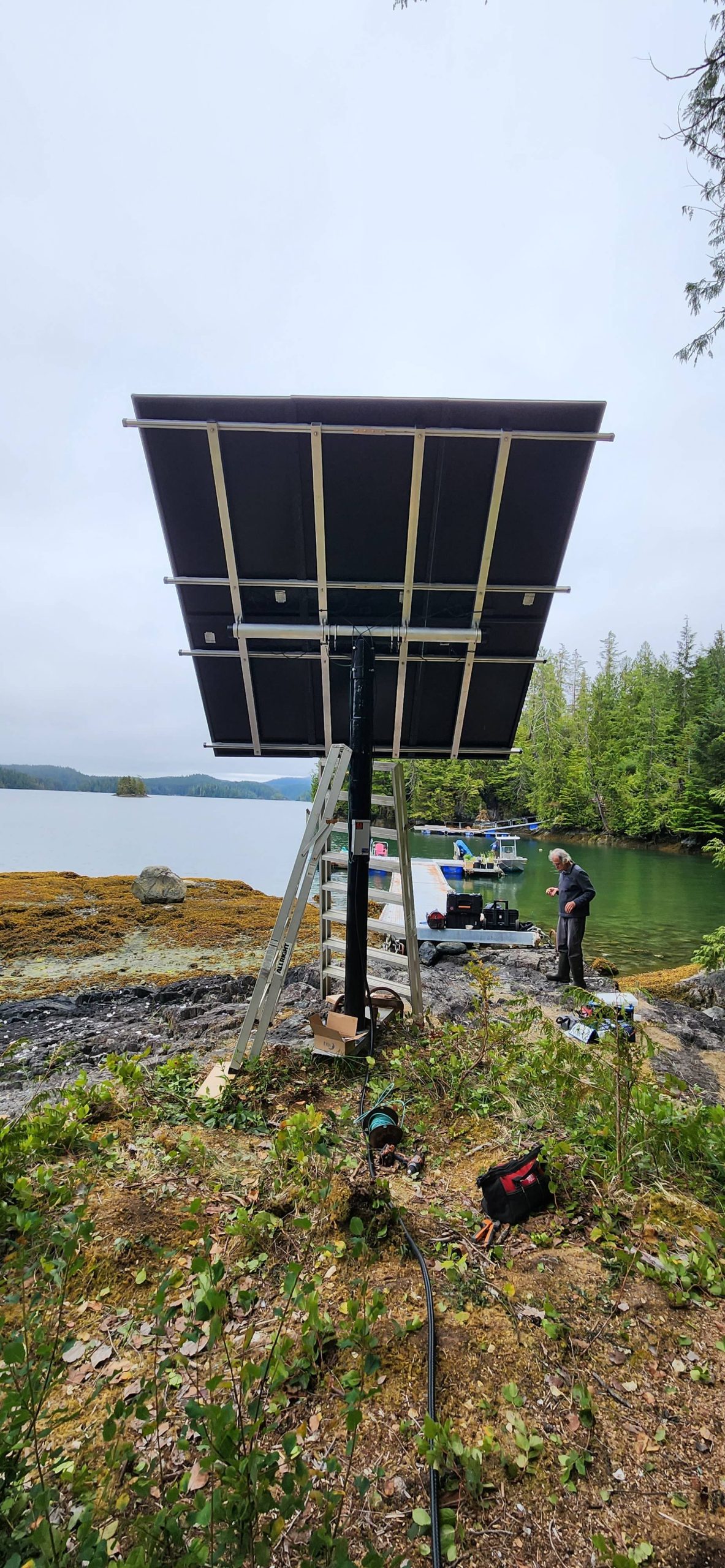
This is the first thing I look at when someone wants a pole mount. Today’s solar panels are bigger and heavier than they were even a few years ago, and most pole-mount setups with four or more panels require a 14-foot pole, with at least 4 feet buried in the ground.
- Is the ground rocky, and do we need to anchor the steel mount instead?
- Is the soil soft enough that we need a bigger concrete footing to keep everything sturdy?
The ground conditions decide the entire mounting approach, and it’s a step a lot of people overlook. Choosing the right spot is half the battle.
You want the option to tilt your panels seasonally
One of the biggest advantages of pole mounts is the ability to adjust tilt. In winter, tilting the array steeper can dramatically increase production.
Most people tilt:
- 35–40° in summer
- 55–65° in winter
If you’re in a climate where winter production is low, this can make the difference between a system that struggles and one that performs beautifully.
If you like the idea of maximizing winter output, pole mounts give you that control.
You don’t want panels on your roof, or your roof isn’t ideal structurally
Some cabins simply aren’t built to take the extra weight or wind load of solar panels.
Examples:
- Older cabins with aging roofs
- Metal roofs with odd angles
- Small roof surfaces
- Leaky or fragile roofing materials
- Cabins that will be reroofed soon
If you don’t trust the roof or you prefer not to put holes in it, a pole mount is a clean, long-term alternative.
You like easy maintenance
Pole mounts are extremely user-friendly.
You can:
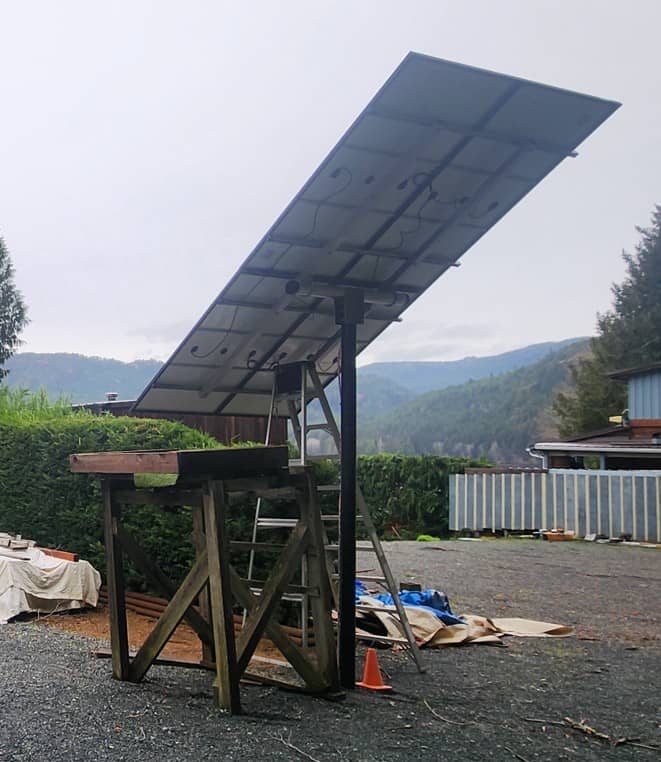
- Clean the panels while standing on the ground
- Clear snow quickly
- Inspect wiring easily
- In some cases tilt the array without climbing a ladder but even so you still have this choice if you do use a ladder.
Roof-mounted arrays can be hard to access, especially in winter or on steep roofs. If simplicity and safety matter to you, pole mounts score high here.
You’re willing to invest a bit more upfront
Pole mounts generally cost more than roof mounts because of:
- The steel pole
- Concrete footing ( Not always but may be the only solution)
- Trenching or conduit
- The mounting hardware
However, they often pay themselves back quickly because they:
- Produce more energy
- Avoid shading
- Allow seasonal tilt
- Stay cooler (higher efficiency)
If you want long-term performance and reliability, the investment is worth it.
Conclusion
Pole mounts are one of the best options for off-grid cabins, but only if your property supports them. If you’ve got a clear sunny spot, want maximum efficiency, and don’t want to deal with the limitations of your roof, a pole mount is likely your best choice.
They offer:
- Better solar access
- Higher winter production
- Easier access
- Long-term reliability
If you’re unsure whether a pole mount would work on your land, I always suggest walking your property, looking at sun exposure, and thinking about where the array could go. And if you ever want help evaluating your site, that’s what I do every day. Just give us a call!
IOTG SOLAR LTD 5 Critical Mistakes To Avoid Before Buying Solar.pdf
For individuals seeking consultation, education, or assistance in system designs related to grid-tie or off-grid solar applications, IOTG Solar stands ready to help. Our team is available to address questions, provide valuable insights, and offer support at every stage of the solar energy journey. Feel free to reach out to IOTG Solar anytime for expert assistance and comprehensive solutions tailored to your specific needs.
IOTG Solar…
Keeping you powered through education.