12 – 24 volt DC Fridges
Are 12V and 24V DC Refrigerators Worth It for Off-Grid Living?
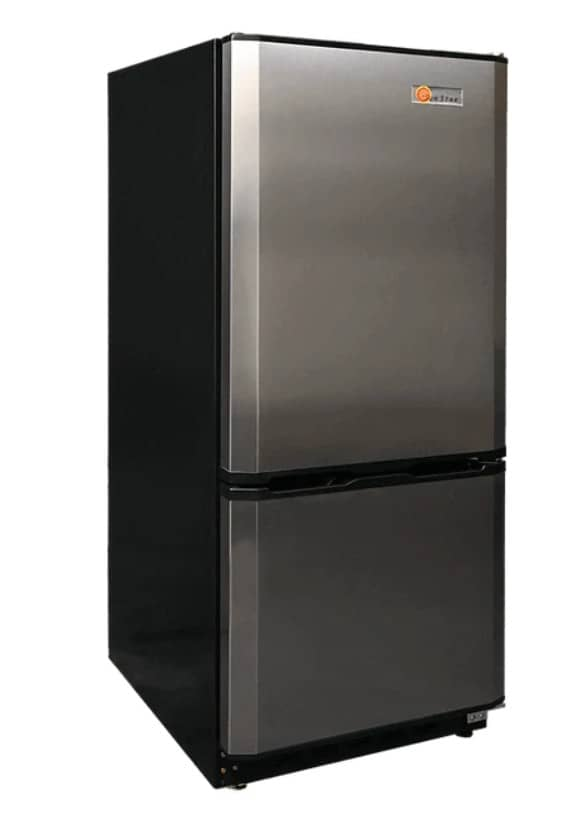
SunStar 10CU Solar DC/AC Refrigerator – Black And Stainless Steel
- Introduction
- How Do They Work?
- Why People Choose DC Fridges
- The Other Side of the Story
- How Efficient Are They?
- So, Are They Worth It?
- Conclusion
Introduction
When you’re running an off-grid cabin, RV, or boat, every watt of energy counts. One appliance that can make a huge difference in energy efficiency is the DC refrigerator. Unlike standard household fridges that run on AC power, these units are designed to operate directly from 12V or 24V battery systems, making them a perfect fit for solar-powered setups.
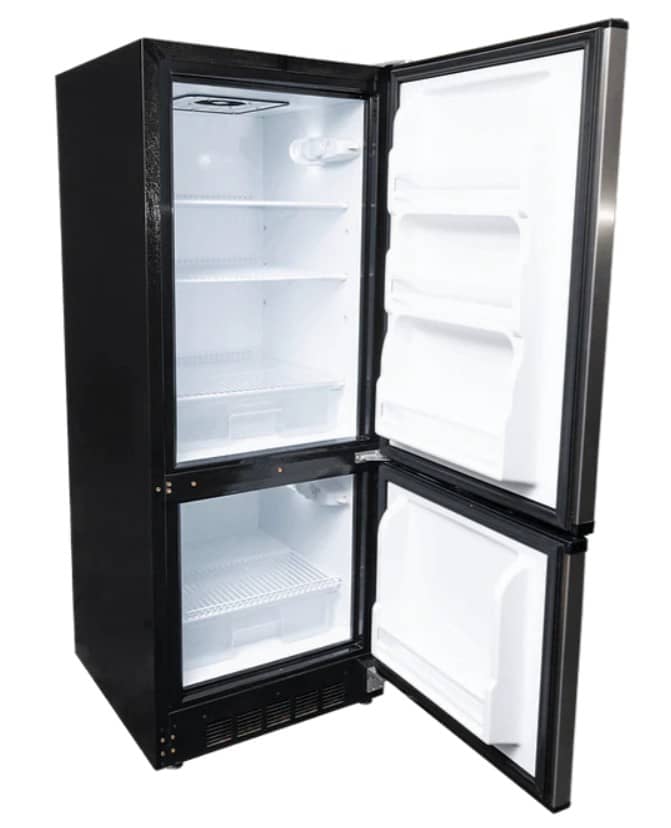
Recently, I’ve been connecting quite a few of these new-style DC fridges to solar systems, and customers have been really impressed with their performance. At first glance, they look just like any other full-size fridge you’d see in a home, but the real difference shows up in how little power they use.
On one project, I connected a DC fridge that drew only 4 amps at 24 volts. That’s impressive efficiency for the cooling it provided. The system I was working on ran on a 48V hybrid inverter, so I used a Victron 48V to 24V DC-DC converter to power the fridge properly. I checked the power draw to size everything correctly, and that’s how I came across those numbers.
The takeaway? These fridges may look like any other appliance, but they use far less energy, making them an excellent choice for off-grid solar systems.
How Do They Work?
Most modern DC fridges use a compressor, just like a standard fridge, but they’re built to operate on low voltage DC power straight from your battery bank. This means you don’t need an inverter to convert power to AC, which eliminates conversion losses and makes your system more efficient overall.
Why People Choose DC Fridges
- Energy Efficiency – They use significantly less energy than older absorption or thermoelectric models, and often less than many AC fridges when you factor in inverter losses.
- Reliable Cooling – They keep food at a stable temperature, even when outside conditions fluctuate.
- Perfect Fit for Solar – Designed to run seamlessly with battery and solar systems without extra hardware.
The Other Side of the Story
Like any specialized piece of equipment, DC refrigerators come with trade-offs:
- They’re expensive. Expect to pay several times the cost of an equivalent AC model.
- They need a good battery bank. They pull steady power around the clock, so your batteries and solar array need to be sized to handle the load.
- Fewer options. Selection is more limited, especially if you’re looking for a larger 24V model.
How Efficient Are They?
Real-world numbers show that many 12V/24V compressor fridges use under 1 kWh per day. For example, a 60L portable fridge may only draw 170–350 Wh in 24 hours depending on temperature settings, while a larger 13 cu ft model may use around 600 Wh/day. That’s quite efficient, especially for off-grid living where every amp-hour counts.
So, Are They Worth It?
For anyone living off the grid or relying on solar power, the answer is usually yes. These fridges cut energy waste, work well with solar systems, and offer dependable cooling without the need for propane or constant shore power.
However, if you’re mostly connected to the grid or you already keep your inverter running full time, an Energy Star-rated AC fridge might be a more cost-effective option.
The real question is: Is your inverter always on? Do you leave it running when you’re away from your cabin, or do you only power it when you’re there full-time?
I’ve seen different approaches from my customers. Some, even though they don’t live in their cabins year-round, keep certain appliances, like fridges and Starlink internet, running 24/7 so they can monitor their solar systems remotely from home. Others take the opposite approach, shutting down their inverters when they leave and only keeping the solar charger active to maintain full batteries.
Your choice will depend on how you use your system and what you want running when you’re not there.
Conclusion
From my experience working with off-grid systems, DC refrigerators are one of those upgrades that just makes sense if you’re looking for both efficiency and reliability. Yes, the upfront cost is higher, but for many off-grid homeowners, the energy savings and peace of mind easily make up for it.
If you’re thinking about adding a DC fridge to your solar setup, it’s important to ensure it’s paired with the right battery capacity and solar charging system. When everything is designed correctly, this upgrade can completely change how you use and manage your energy.
Need help choosing the right DC fridge? Have questions about how it would work with your system? We can help you find the perfect model and make sure it’s properly connected to your solar system. Our distributors now carry a full range of DC refrigerators in different sizes and price points, so there’s an option for every setup. Feel free to reach out!
IOTG SOLAR LTD 5 Critical Mistakes To Avoid Before Buying Solar.pdf
For individuals seeking consultation, education, or assistance in system designs related to grid-tie or off-grid solar applications, IOTG Solar stands ready to help. Our team is available to address questions, provide valuable insights, and offer support at every stage of the solar energy journey. Feel free to reach out to IOTG Solar anytime for expert assistance and comprehensive solutions tailored to your specific needs.
IOTG Solar…
Keeping you powered through education.